

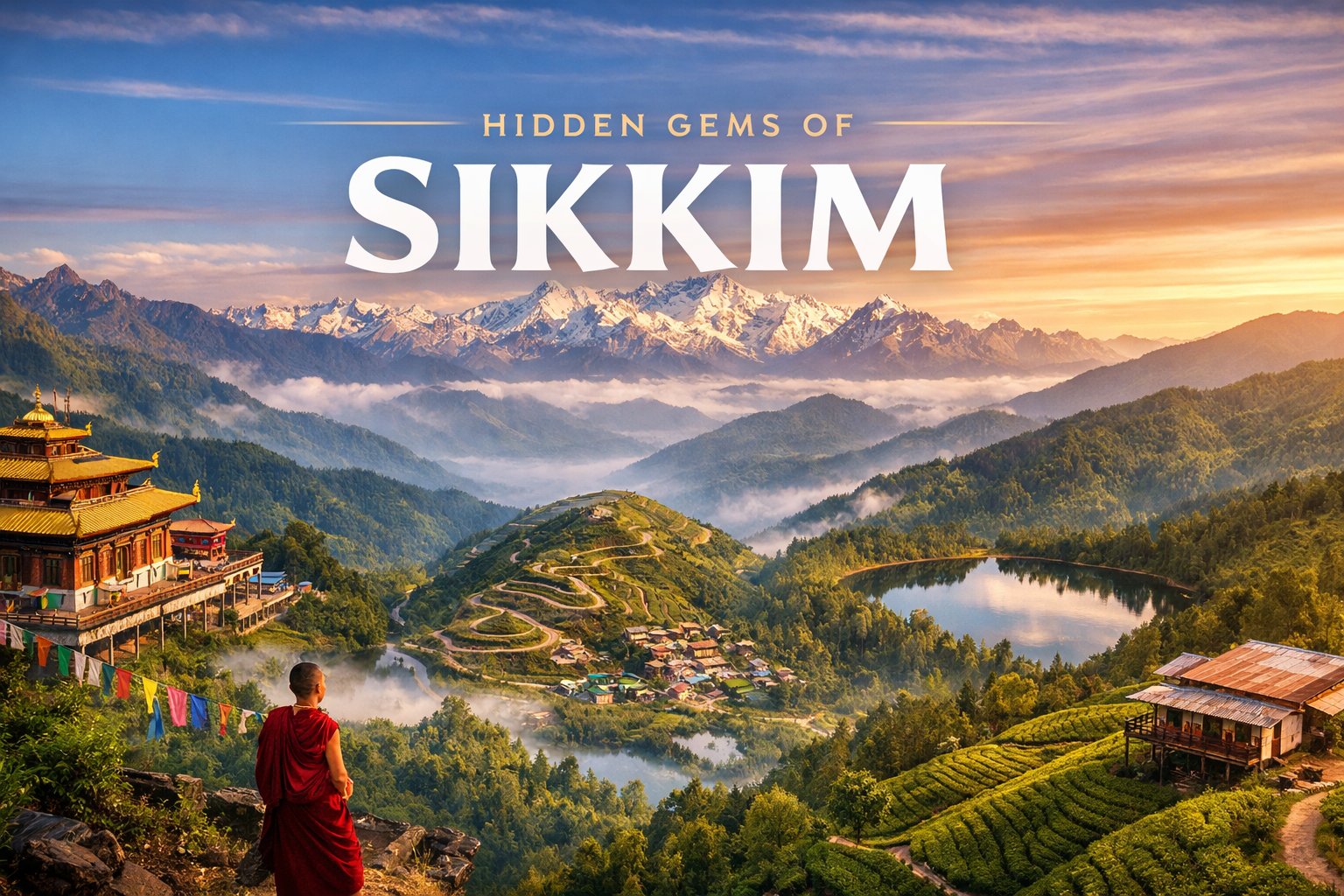
5 Hidden Gems in Sikkim: The Ultimate 2026 Offbeat Travel Guide
Offbeat Verification Signal: Sikkim’s popular tourist corridors are undeniably stunning, but they frequently come with long tourist vehicle lines and crowded observation decks. This curated guide skips the common commercial hubs to showcase true, high-altitude hidden hamlets, indigenous reserves, and the exact permit procedures required to access them.
When most travelers plan a Himalayan holiday to Sikkim, their itineraries center heavily on Gangtok’s MG Marg, the frozen waters of Tsomgo Lake, or the long drive up to Gurudongmar. While beautiful, these standard routes miss the true soul of the state.
Discovering the raw, untouched side of the Eastern Himalayas requires stepping off the main highways. It means trading commercial hotels for authentic local homestays, sitting by a traditional kitchen fire, and navigating steep border-zone roads. Below is our verified 2026 guide to the finest hidden destinations in Sikkim.
2026 Sikkim Offbeat Location Index
| Hidden Destination | High-Altitude Elevation | Key Cultural Attraction | Mandatory Entry Permit Status | Best Travel Window |
| Dzongu Valley | Varies (Up to 6,000 ft) | Lepcha Indigenous Reserve | RAP Permit Required from Mangan | March – May (Spring blooms) |
| Zuluk Loop | 10,000 Feet | 32 Serpentine Hairpin Bends | Silk Route Permit Required | Oct – Nov (Clear mountain views) |
| Tarey Bhir | 10,000 Feet | 3,500 ft Cliff-Edge Stairway | Standard Sikkim Entry | March – June / Oct – Dec |
| Rolep Hamlet | 4,000 Feet | Riverside Rangpo Chhu Walks | Rongli Checkpost Permit | Year-Round (Except Monsoon) |
| Rinchenpong | 5,570 Feet | Ancient Monasteries & Poison Lake | Standard Sikkim Entry | October – May |
Deep-Dive: The 5 Offbeat Blueprints
1. Dzongu Valley (The Sacred Lepcha Reserve)
Tucked away quietly in North Sikkim, Dzongu stands as a dedicated, protected sanctuary for the indigenous Lepcha community.
- The Environment: Bounded by the gushing Teesta and Kanaka rivers, this pristine valley feels entirely disconnected from modern commercialization. The landscape is a lush maze of hanging wooden bridges, hidden waterfalls, and cardamom fields.
- The Logistics: You cannot simply book a stay and drive in. Dzongu is a restricted zone. You must secure a dedicated Restricted Area Permit (RAP) from the District Administration Office at Mangan, typically arranged ahead of time by an authorized local homestay host.
2. Zuluk (The Serpentine Silk Route)
Perched steeply along the ancient Indo-China trade path, Zuluk is a quiet, high-altitude military-outpost village.
- The Engineering Marvel: The primary highlight here is the iconic Zuluk Loop—a jaw-dropping section of road featuring 32 sharp hairpin bends snaking up the mountain slope. Catching the sunrise from the nearby Thambi Viewpoint offers an unmatched view of Mount Kanchenjunga.
- The Catch: Due to its close proximity to the international border, the entire circuit requires a specialized Silk Route Permit. Keep at least five physical copies of your government photo ID and passport-sized photographs ready at the Rongli checkpost.
3. Tarey Bhir (The Stairway to the Clouds)
Located in South Sikkim near the quiet village of Sadam, Tarey Bhir is one of the most dramatic geological features in the region.
- The Sensation: It is a massive, sharp stone ridge stretching nearly 10,000 feet long, dropping abruptly into a 3,500-foot valley below.
- The Walk: The local administration has constructed a long, scenic stone pathway with safety railings right along the spine of the ridge. Walking along it feels like stepping directly into the mist.
4. Rolep (The Isolated Riverside Retreat)
If you want to experience total peace away from mobile phone notifications, Rolep in East Sikkim is an ideal escape.
- The Vibe: A quiet, rustic farming village built directly along the boulder-lined banks of the Rangpo Chhu river.
- The Activity: Spend your days crossing local suspension bridges, spotting bright Himalayan birds, and enjoying home-cooked meals prepared over traditional wood-fired stoves.
5. Rinchenpong (The Kanchenjunga Balcony)
Situated in West Sikkim, Rinchenpong offers a historic, crowd-free alternative to the busy viewpoints of Pelling.
- The View: The village provides clear, panoramic views of the Kanchenjunga mountain range directly from your room window.
- The History: Take a short hike through the pine forests to visit the historic Rinchenpong Monastery or explore the mysterious Poison Lake—a historical site where local tribes poisoned the water supply to defeat invading forces.
High-Altitude Logistical Traps to Avoid
- The Bagdogra to Gangtok Transit Bottleneck: Sikkim lacks a fully operational main commercial railway grid, and the local Pakyong Airport closes frequently due to low hanging mist. Most independent travelers fly into Bagdogra (IXB) in West Bengal. Avoid taking unverified private cabs outside the airport gates; instead, pre-book a registered Sikkimese luxury SUV (like an Innova or Scorpio) to comfortably manage the bumpy, winding segments of National Highway 10.
- The Luxury Hotel Assumption: These offbeat pockets do not feature large commercial luxury resorts or 24-hour room service. You will be staying in warm, family-run local homestays. Power outages can happen during storms, and hot water is often provided in buckets heated over wood fires. Embrace the local hospitality and respect rural community guidelines.
- The Monsoon Landslide Window: Never try to explore offbeat Sikkim between late June and mid-September. The region experiences heavy monsoon downpours that frequently trigger flash floods and major landslides along the highways, completely cutting off remote villages for days at a time.
Managing acclimatization here follows a very similar process to navigating the best time to visit leh ladakh.
Frequently Asked Questions (FAQ)
Q1: Can foreign passport holders visit restricted offbeat areas like Zuluk or Dzongu?
No. Due to strict national security border regulations, foreign nationals are not permitted to travel through Zuluk or the inner tracts of the Dzongu Lepcha Reserve. These specific offbeat areas are strictly reserved for domestic Indian tourists carrying valid permits.
Q2: Is vegetarian food easily available in remote Sikkimese homestays?
Yes. While the local diet features unique meat dishes, Sikkimese homestay hosts are incredibly accommodating. You will be served fresh, organic vegetarian meals featuring local forest ferns, squash, independent farm vegetables, and hot dal rice.
Q3: What is the minimum number of days required to cover the Old Silk Route loop?
To comfortably enjoy the high-altitude views without rushed driving, you need a minimum of 3 Nights and 4 Days originating from and returning to Gangtok. This allows your body to naturally acclimate to the changing elevations at each stop.